The dawn of a new era in urban civilization has officially begun with the monumental groundbreaking of AI Cars City, a first-of-its-kind metropolitan experiment designed from the ground up for autonomous vehicles and intelligent systems. This isn’t merely another real estate development or tech park; it is a full-scale, living prototype of the future city, where every brick, road, and traffic signal is infused with artificial intelligence. The commencement of construction marks a pivotal leap from conceptual blueprints and isolated smart city modules to a fully integrated, holistic urban ecosystem. This ambitious project promises to redefine the core tenets of urban living, transportation, economic activity, and sustainability, offering a tangible glimpse into a world where human life is seamlessly interwoven with advanced machine intelligence. The implications are profound, stretching far beyond mere convenience to touch upon environmental salvation, economic restructuring, and the very social fabric of our communities.
A. The Foundational Vision and Architectural Philosophy of AI Cars City
The core vision of AI Cars City is deceptively simple yet revolutionary: to eliminate the fundamental friction points of traditional urban centers by making artificial intelligence and autonomy the central operating system, not mere add-ons. Traditional cities evolved organically over centuries, struggling to retrofit modern technology into aging infrastructures. In stark contrast, AI Cars City is being built ex novo on a dedicated land parcel, allowing planners, technologists, and urban designers to start with a blank slate.
The architectural philosophy rests on several interdependent pillars. First is the principle of “Mobility-First Design.” Here, the private, human-operated automobile is relegated to history. The entire circulatory system of the city its roads, junctions, and curbsides is engineered exclusively for a fleet of interconnected, self-driving vehicles (SDVs), including cars, shuttles, and delivery pods. This eliminates the need for traffic lights, stop signs, sprawling parking lots, and even garages attached to homes. The urban landscape is freed from the tyranny of parked cars, reclaiming an estimated 30-40% of land typically devoted to stationary vehicles for green spaces, pedestrian plazas, and community infrastructure.
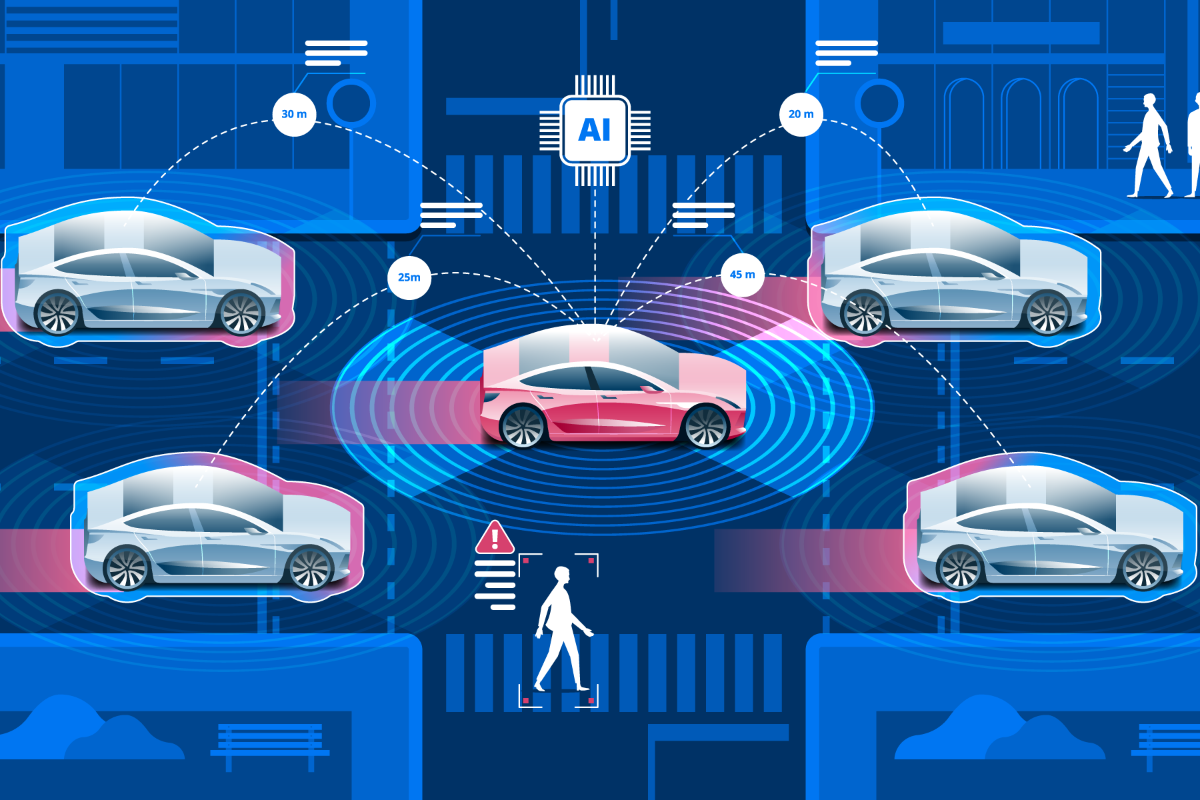
Second is the “Data as Infrastructure” doctrine. Just as traditional cities require pipes for water and cables for electricity, AI Cars City is being built with a dense, ubiquitous network of sensors, LiDAR, cameras, and 5G/6G communication nodes. This sensorium generates a real-time, high-fidelity digital twin of the entire urban environment. This data feeds the city’s central AI brain and individual vehicles, enabling predictive traffic flow management, instant adaptation to emergencies, and hyper-efficient public service allocation.
Third is the “Human-Centric Reclamation” goal. By removing driver-centric infrastructure, the design focus returns to human scale and experience. Wide roads are narrowed and repurposed into multi-modal corridors for micro-mobility (e-bikes, e-scooters) and pedestrians. The reclaimed space fosters community interaction, with parks, outdoor cafes, and recreational zones becoming the new focal points of neighborhood life, not asphalt vistas.
B. The Core Infrastructure: A Symphony of Connected Systems
The technological bedrock of AI Cars City is a layered, interconnected mesh of systems working in concert. Understanding this infrastructure is key to appreciating the city’s potential.
A. The Autonomous Transportation Grid: The lifeblood of the city is its fleet of diverse, purpose-built autonomous vehicles. This includes:
* Shared People Movers: On-demand, electric shuttles that operate like a perpetual, point-to-point public transit system without schedules or fixed routes.
* Freight and Logistics Pods: Separate, subterranean or dedicated-lane networks for delivering goods, eliminating delivery trucks from surface streets.
* Personal Rapid Transit (PRT): Smaller, pod-like vehicles for private or small-group travel, summoned via app.
* Emergency and Service Vehicles: AI-integrated ambulances, fire trucks, and utility vehicles given perpetual right-of-way by the coordinating system.
B. The Unified Digital Nervous System: A city-wide IoT network blankets every structure and public space. Smart utility grids manage energy and water with extreme efficiency. Adaptive street lighting responds to presence. Waste management systems use autonomous collection and sensor-equipped bins to optimize routes. Building management systems interface with the city grid to balance energy loads.
C. The Central AI Orchestrator (The “City Brain”): This is the mastermind of the operation. Powered by advanced machine learning algorithms and vast computing resources, it processes terabytes of real-time data from the sensor network and vehicles. It doesn’t just react; it predicts and optimizes. It can pre-emptively reroute traffic flows based on predicted congestion, dispatch maintenance to a water leak detected by acoustic sensors, and coordinate energy distribution from renewable sources across the city microgrid.
D. Cybersecurity and Digital Resilience Fortress: Recognizing the monumental risk of a centralized smart city, the architects have made cybersecurity a foundational element, not an afterthought. The network employs quantum-resistant encryption, decentralized blockchain-based protocols for critical data integrity, and rigorous penetration testing. Redundant systems and fail-safe mechanical overrides ensure that a digital failure does not lead to a complete urban collapse.
C. Profound Impacts on Sustainability, Environment, and Urban Form
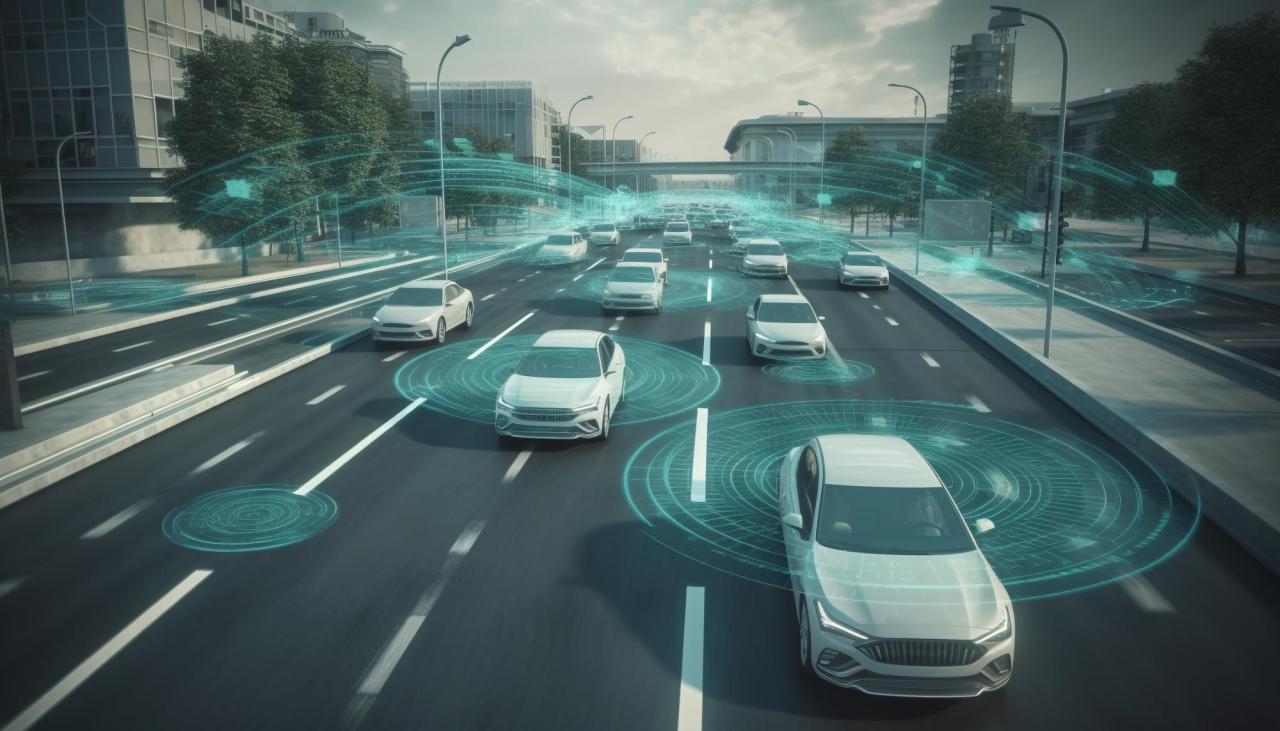
The environmental and spatial benefits of AI Cars City represent one of its most compelling justifications. The transition to an all-electric, shared autonomous fleet will dramatically reduce carbon emissions, with studies suggesting a potential reduction of over 80% in transportation-related emissions per capita. Smoother, AI-optimized driving patterns further reduce energy consumption and particulate matter from brake and tire wear.
The land-use transformation is perhaps even more visually striking. The elimination of parking lots and the reduction of road widths can increase green space by up to 50% compared to a conventional city of similar population density. This green space isn’t just aesthetic; it manages stormwater, reduces the urban heat island effect, and promotes biodiversity. Buildings, freed from the need for large driveways and garages, can adopt more efficient footprints and designs oriented around natural light and communal courtyards. The city essentially inverts the traditional model, placing landscape and people at the center, with mobility operating as an invisible, efficient service underneath and around them.
D. Economic, Social, and Lifestyle Implications for Residents
Living in AI Cars City will necessitate and foster a fundamentally different lifestyle, with significant economic ripple effects.
A. The Economics of Access-over-Ownership: Residents will likely subscribe to “Mobility-as-a-Service” (MaaS) packages rather than own cars, saving thousands annually on car payments, insurance, fuel, and maintenance. This disposable income can be redirected into the local economy. Real estate values may shift, with proximity to parks or community hubs becoming more valuable than proximity to a highway on-ramp.
B. Reclaimed Time and Productivity: The average commuter spends hundreds of hours per year behind the wheel. In AI Cars City, travel time becomes productive or leisure time. Commutes transform into opportunities for work, reading, entertainment, or relaxation, potentially boosting economic productivity and personal well-being.
C. Inclusive Mobility: The system offers unprecedented freedom for non-drivers: the elderly, the disabled, and children. An app-summoned vehicle provides door-to-door independence for all, potentially reducing social isolation and increasing access to services and employment.
D. New Commercial and Service Models: Retail and logistics will evolve. With autonomous delivery networks, inventory can be held in peripheral, automated warehouses, reducing the need for large, central retail stores. This could spur a renaissance for experiential brick-and-mortar spaces showrooms, cafes, workshops while delivery of goods becomes hyper-efficient. The service economy may see a rise in remote, AI-assisted roles and new jobs in system maintenance, data analysis, and urban AI management.
E. Addressing the Inevitable Challenges and Ethical Considerations
The path to this utopian vision is fraught with technical, social, and ethical hurdles that the project’s backers must transparently address.
A. Data Privacy and Surveillance: A city saturated with sensors is, by definition, a city capable of perpetual surveillance. Who owns the data generated by a citizen’s movements? How is it anonymized, stored, and used? Robust, transparent data governance frameworks and clear citizen rights must be established to prevent a dystopian surveillance state.
B. Technological Dependency and Failure Modes: The city’s functioning is entirely dependent on complex, interconnected technologies. The resilience of the system against major cyber-attacks, natural disasters, or widespread software failures must be proven. Mechanical and analog backups for essential services like water and emergency egress are non-negotiable.
C. Social Equity and Accessibility: There is a high risk of creating an exclusive enclave for the tech-elite. To avoid this, the project must incorporate substantial affordable housing quotas, ensure MaaS subscriptions are priced accessibly, and design inclusivity into its very core from the beginning. It must not become a gated community for the digital wealthy.
D. The Human Element and Urban Soul: A common critique of such technocratic visions is that they could create sterile, overly efficient environments lacking the serendipity, chaos, and organic culture that define great cities. Planners must intentionally design for human spontaneity, unplanned social interaction, and spaces for informal street life, art, and protest. The city’s “soul” must be a design parameter, not an afterthought.
F. The Broader Implications: A Global Template or a Isolated Experiment?
The groundbreaking of AI Cars City is more than a local event; it is a global spectacle being watched by municipal governments, tech giants, and urban planners worldwide. Its success or failure will provide invaluable, real-world data on the viability of full-scale AI urbanism.
If successful, it will serve as a scalable template. Districts within existing megacities like docklands, old industrial zones, or new suburbs could be redeveloped using its principles. The technologies and protocols refined here could be licensed and adapted, accelerating the smart city transition globally. It could prove the economic and environmental case for massive, disruptive investment in urban retrofitting.
Conversely, if it stumbles due to technological overreach, social resistance, or unanticipated flaws, it could become a cautionary tale, setting back the integrated smart city movement by decades. It might prove that such systems are best implemented incrementally rather than in a revolutionary, all-at-once manner.
Conclusion: Building the Prototype for Tomorrow’s World
The ceremonial groundbreaking of AI Cars City is a landmark moment in the 21st century. It represents the audacious human ambition to not just adapt to technological change, but to use it as the very clay from which to sculpt a new form of human habitat. It is a bold bet that the convergence of AI, autonomy, and IoT can solve the entrenched problems of congestion, pollution, inefficiency, and social inequity that plague our modern urban centers.
The journey ahead is long, complex, and uncertain, filled with both immense promise and profound challenges. The world will be watching, learning, and debating as this prototype rises from the ground. Whether it ultimately becomes a shining beacon of a sustainable, efficient, and human-centric future or a learned lesson in the limits of technological utopianism, one thing is undeniable: AI Cars City has begun to move the conversation about our urban future from the drawing board and the laboratory into the realm of tangible, poured-concrete reality. It is now our responsibility to guide its development with wisdom, ethics, and an unwavering focus on enhancing human flourishing.